Estados Unidos
Designation: Grumman F14 Tomcat.Units: 675 built.
Speed: Mach 2.34.
Service ceiling: 53,000 feet.
Size: 18.6m long, 4.8m height. Being a variable geometry aircraft, width varies considerably, being 19m long with wings unswept or 11.4m when swept.
Powerplant: F14A: 2 x Pratt & Whitney TF-30P-414A (9,405 kg thrust per unit). F14B/D: 2 x General Electric F-110-GE-400 (12,150 kg thrust per unit).
Range: Depending on mission, maximun established in 500 nautical miles.
Weapons: 1 x 20mm Vulcan M61A gatling cannon. Depending on aircraft version (A,B,D) was able to fire the following missiles: AIM-54 Phoenix ( retired from service in 2004 ), AIM-120 AMRAAM, AIM-7 Sparrow and AIM-9 Sidewinder. Conventional weapons included the Mk-82, Mk-83 y Mk-84, and their laser guided versions: GBU-12, GBU-16 and GBU-24. It was also capable of deploying Mk-20 Rockeye II, Mk-82 and Mk-84 with JDAM kit (named GBU-38 and GBU-31).
Sensors: Depending on versions, the F14A integrated the AN/AWG-9 radar, while the F14D carried the newer AN/APG-71. Countermeasures were also dependant on aircraft version, with A´s carrying a radar warning AN/ALR-45, and others a radar warning AN/ALR-67, an AN/ALQ-167 ECM pod and AN/ALE-50 towed decoy. Some selected units also carried a TARPS device, for aerial recon.
Coment: Designed as an air superiority fighter and interceptor, it´s main role was to defend carrier battle groups against Soviet Navy aircraft armed with cruise missiles. In order to do so a long range missile was provided, the AIM-54 Phoenix, capable of hitting targets 200km away, and a radar capable of detecting targets at ranges exceeding 160km. During its active years the type participated in almost all military actions in which the United States were involved: Vietnam, Lebanon, Lybia, Grenada, Irak, Bosnia and Yugoslavia. Despite it´s size, and being designed for operating at high speeds, it was considered one of the most agile combat aircraft of his era, as a result of the restrictions applied to all carrier based aircraft. Being retired progressively from service since 2000, in February 2006 completed its last combat mission. At the end of 2006 the type will be removed from service and stricken from the inventory, and will enter aviation history, as a true representative of the naval aviation spirit.

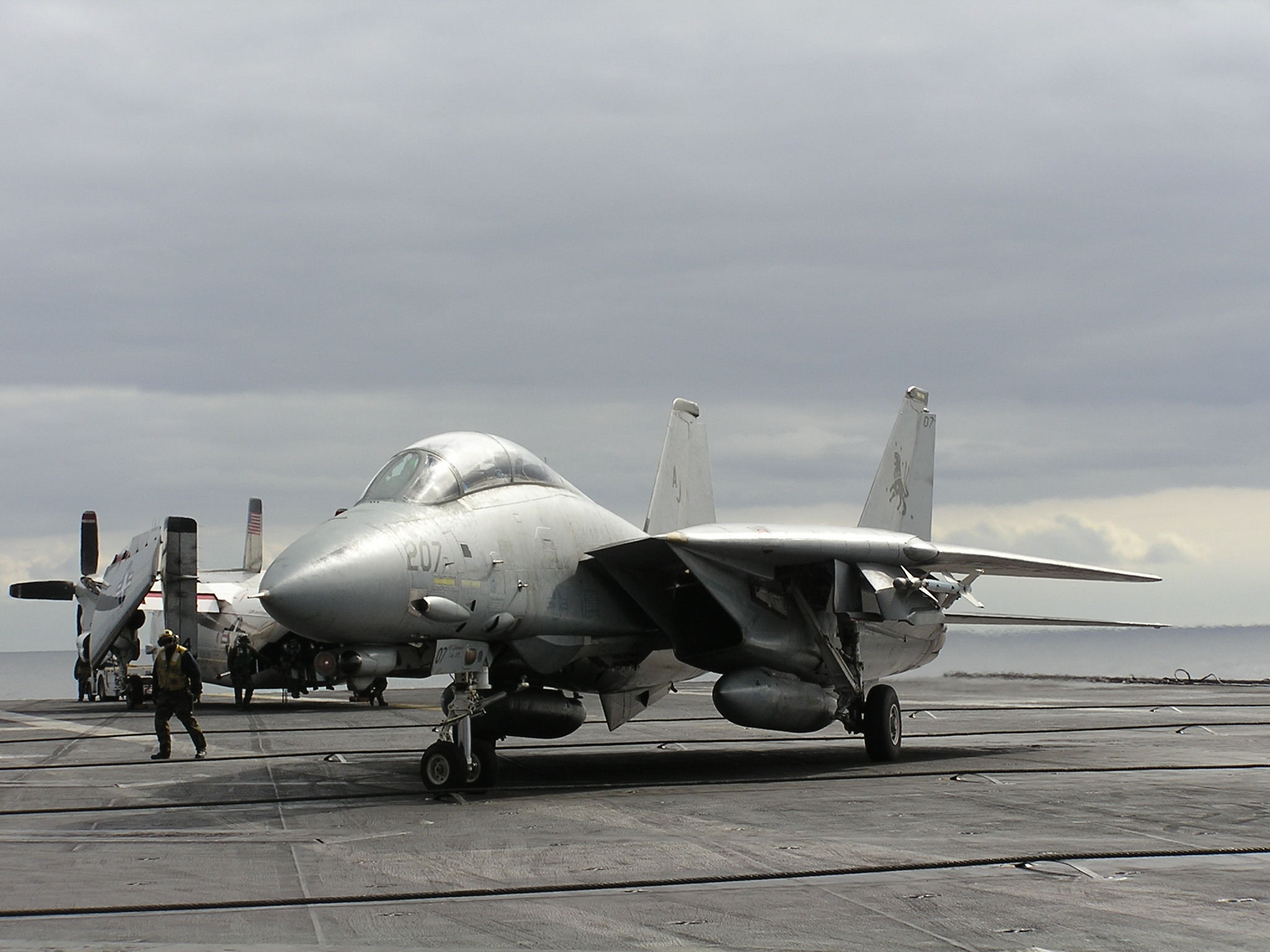
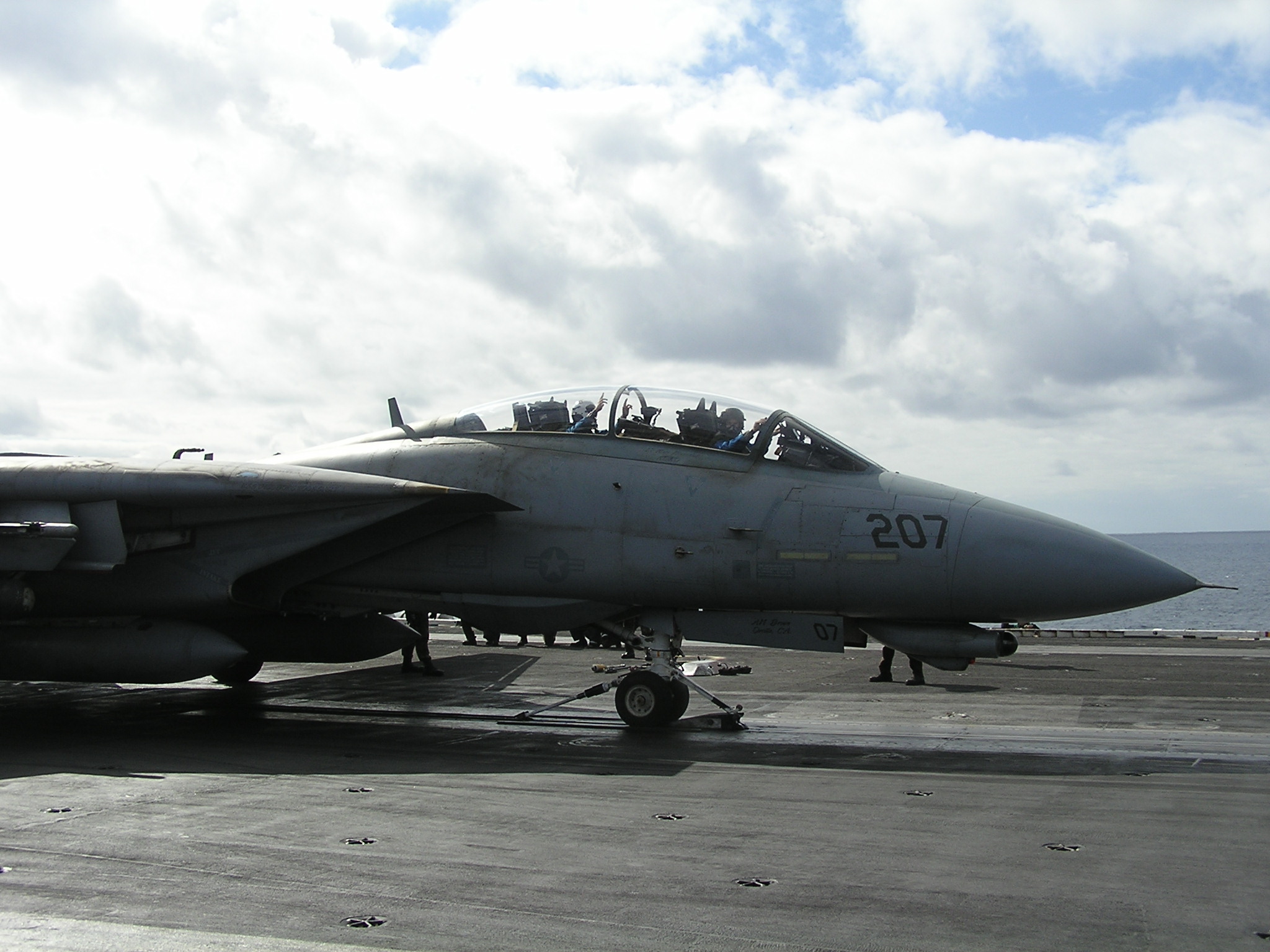
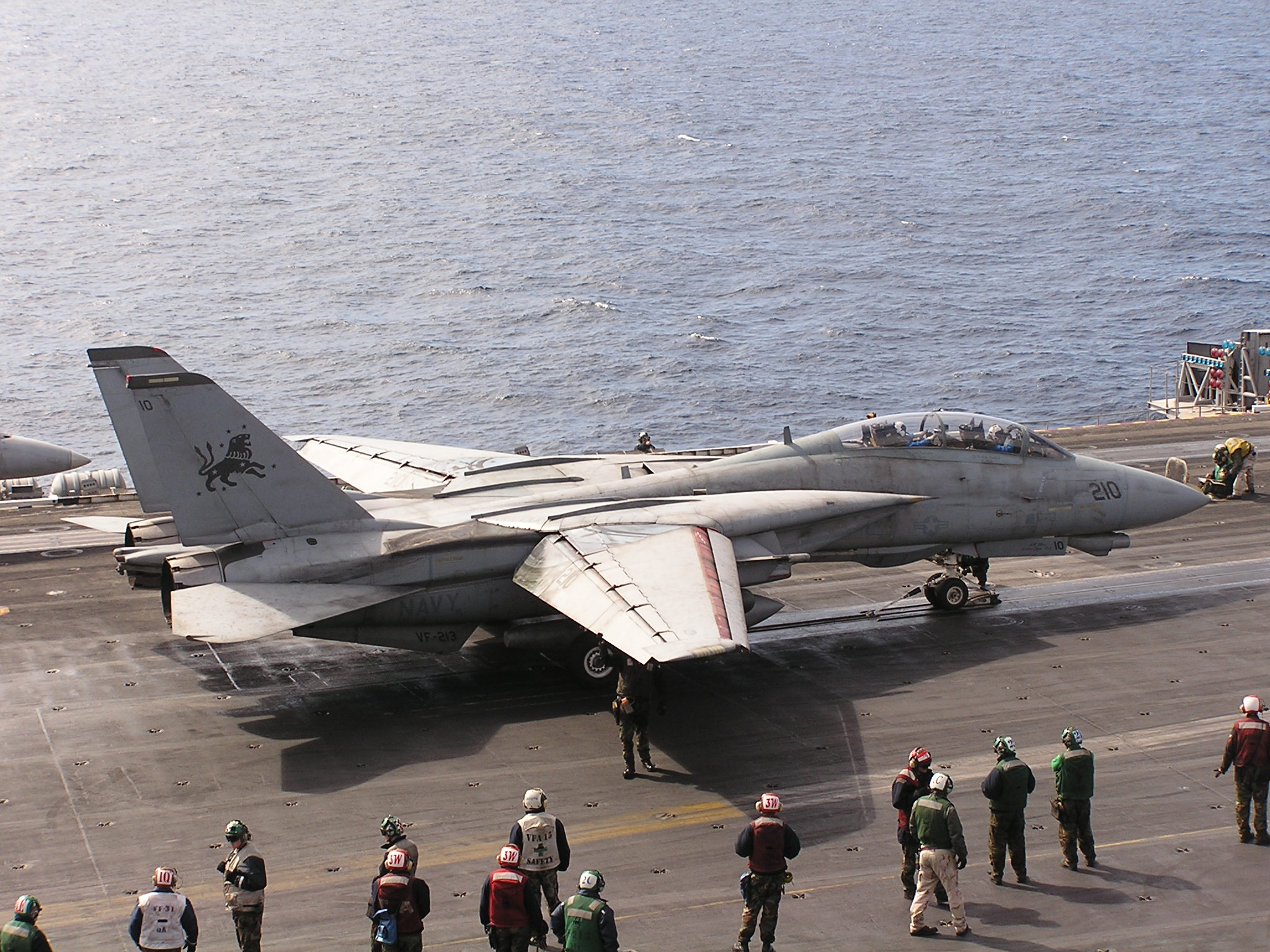
Tomcat taxiing on Theodore Roosevelt´s flight deck, 3rd March 2006, Luís Díaz-Bedía Astor
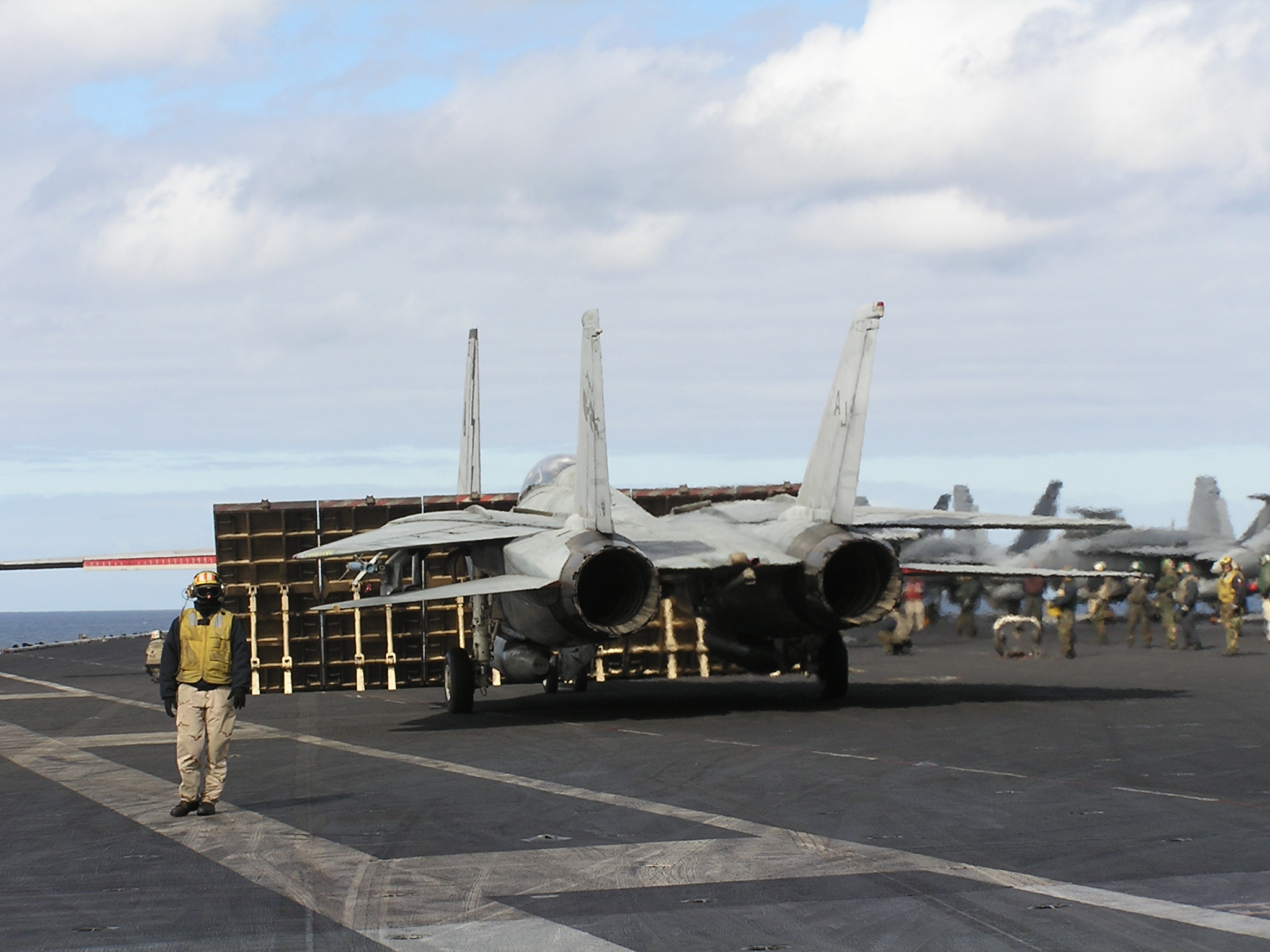
Tomcat waiting it´s turn for take-off behind a jet blast deflector on Theodore Roosevelt´s flight deck, 3rd March 2006, Luís Díaz-Bedía Astor
Tomcat behind a jet blast deflector on Theodore Roosevelt´s flight deck, 3rd March 2006, Luís Díaz-Bedía Astor
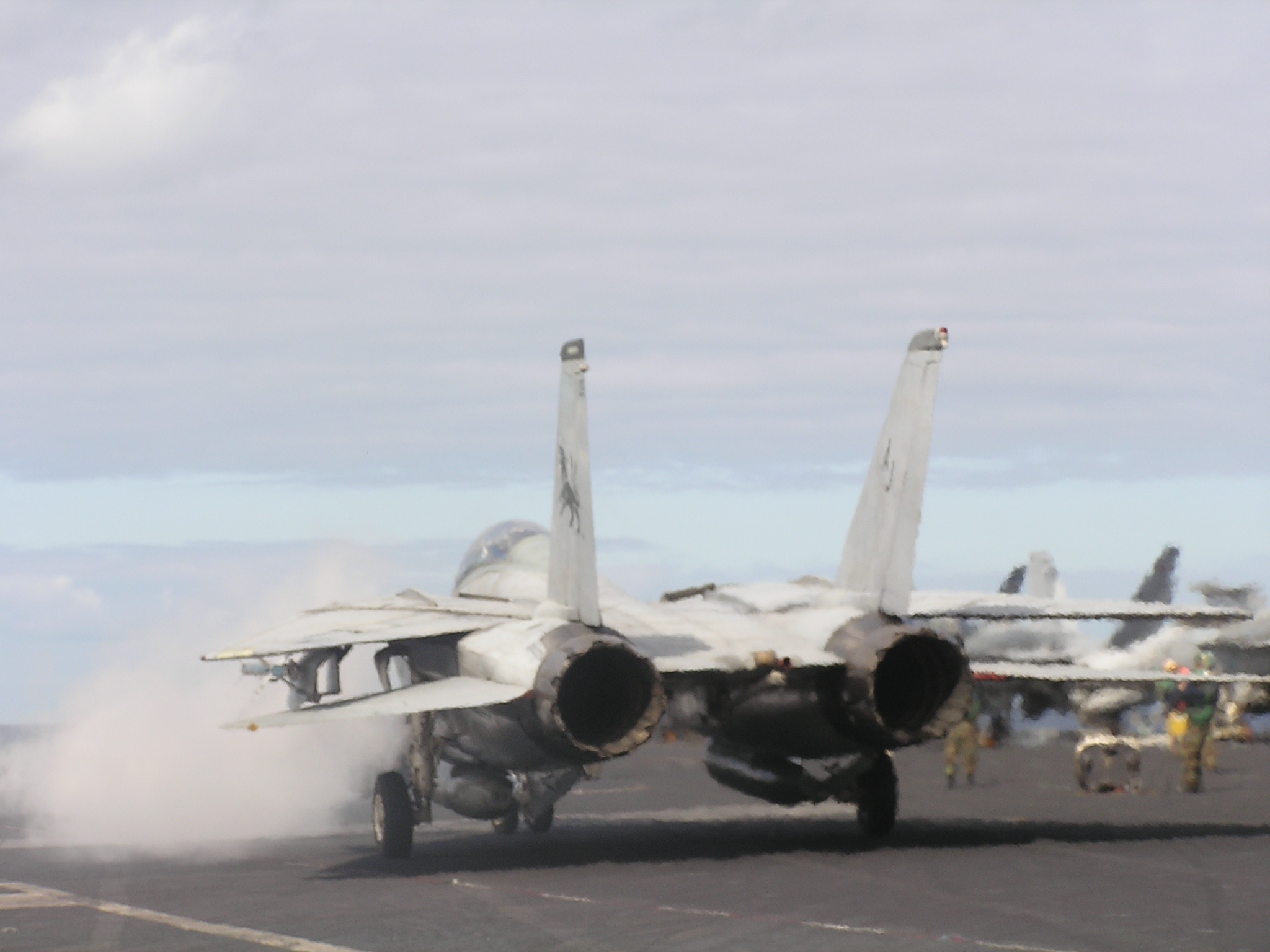
Tomcat taxiing towards the take-off catapult on Theodore Roosevelt´s flight deck, 3rd March 2006, Luís Díaz-Bedía Astor
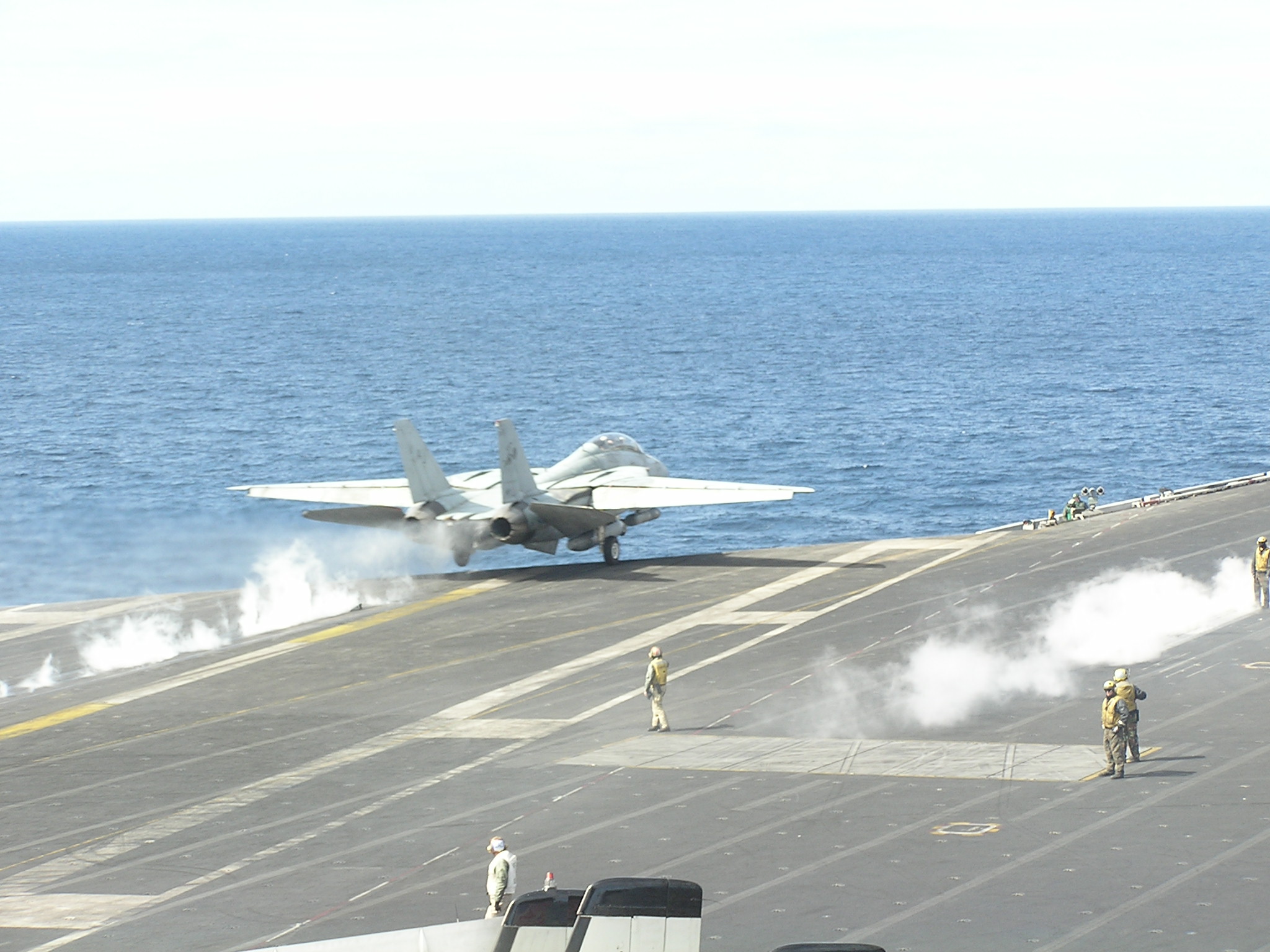
Tomcat on catapult on board Theodore Roosevelt, 3rd March 2006, Luís Díaz-Bedía Astor
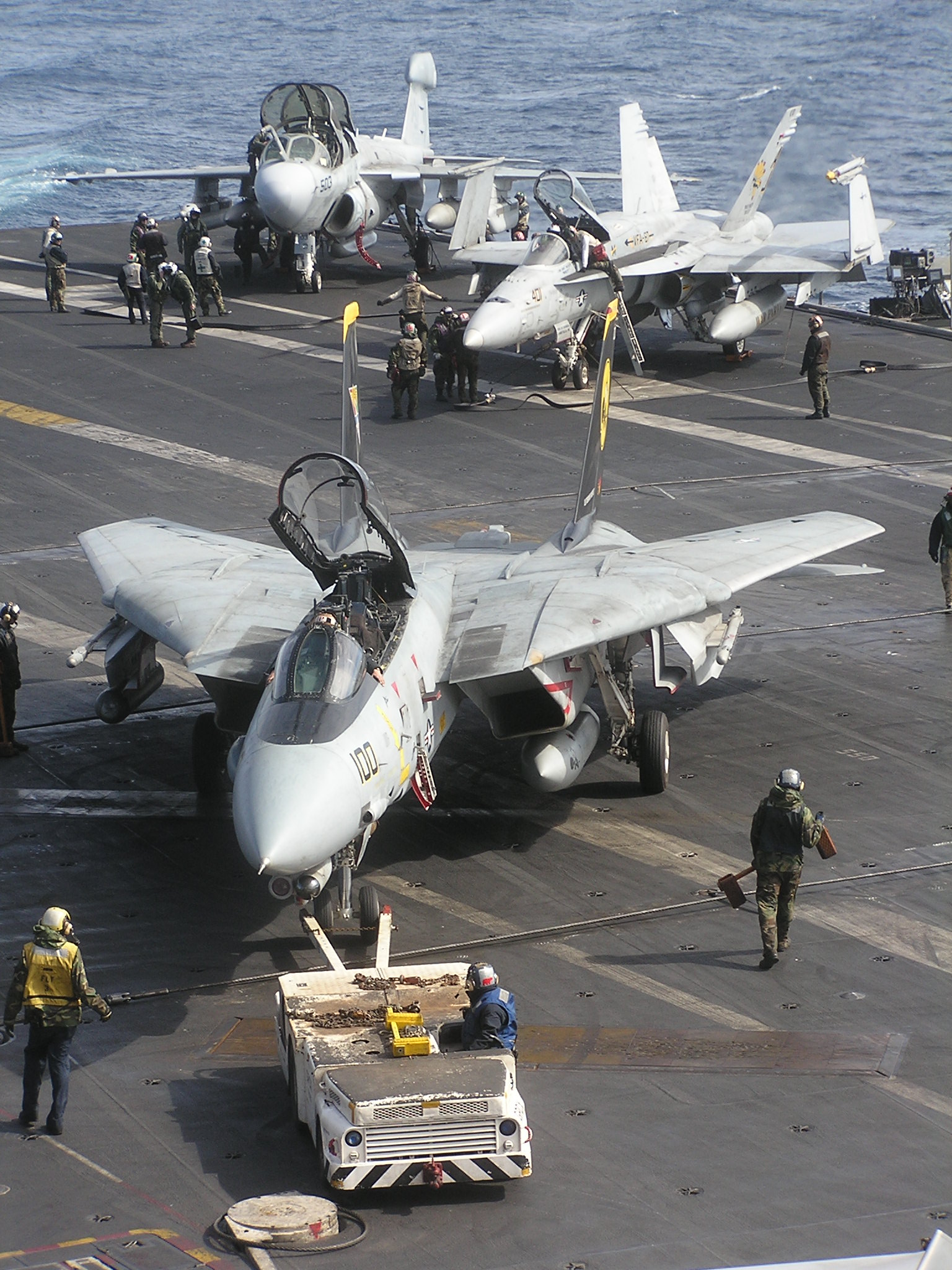
Tomcat towed to a parking space on Theodore Roosevelt´s flight deck, 3rd March 2006, Luís Díaz-Bedía Astor
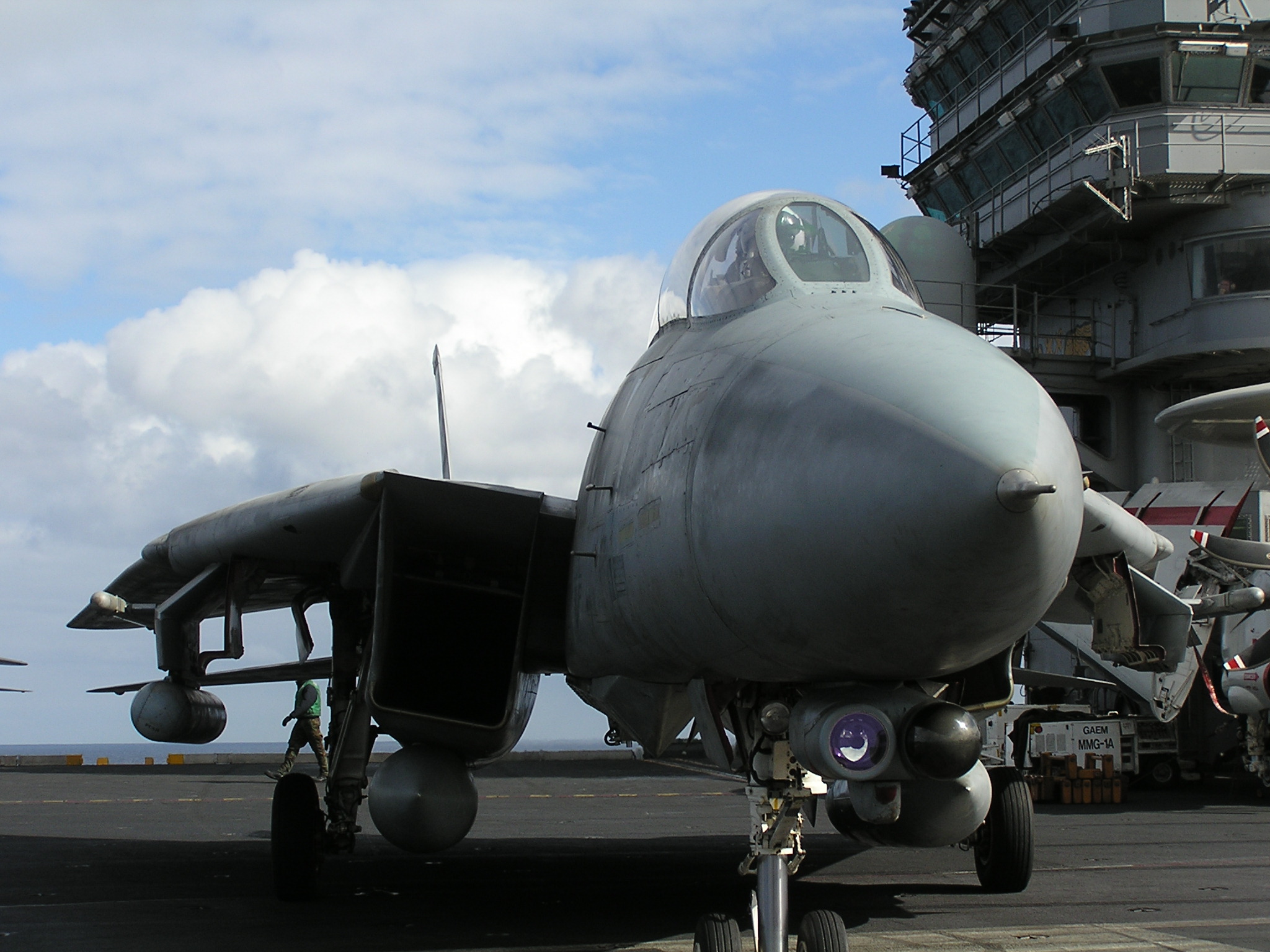
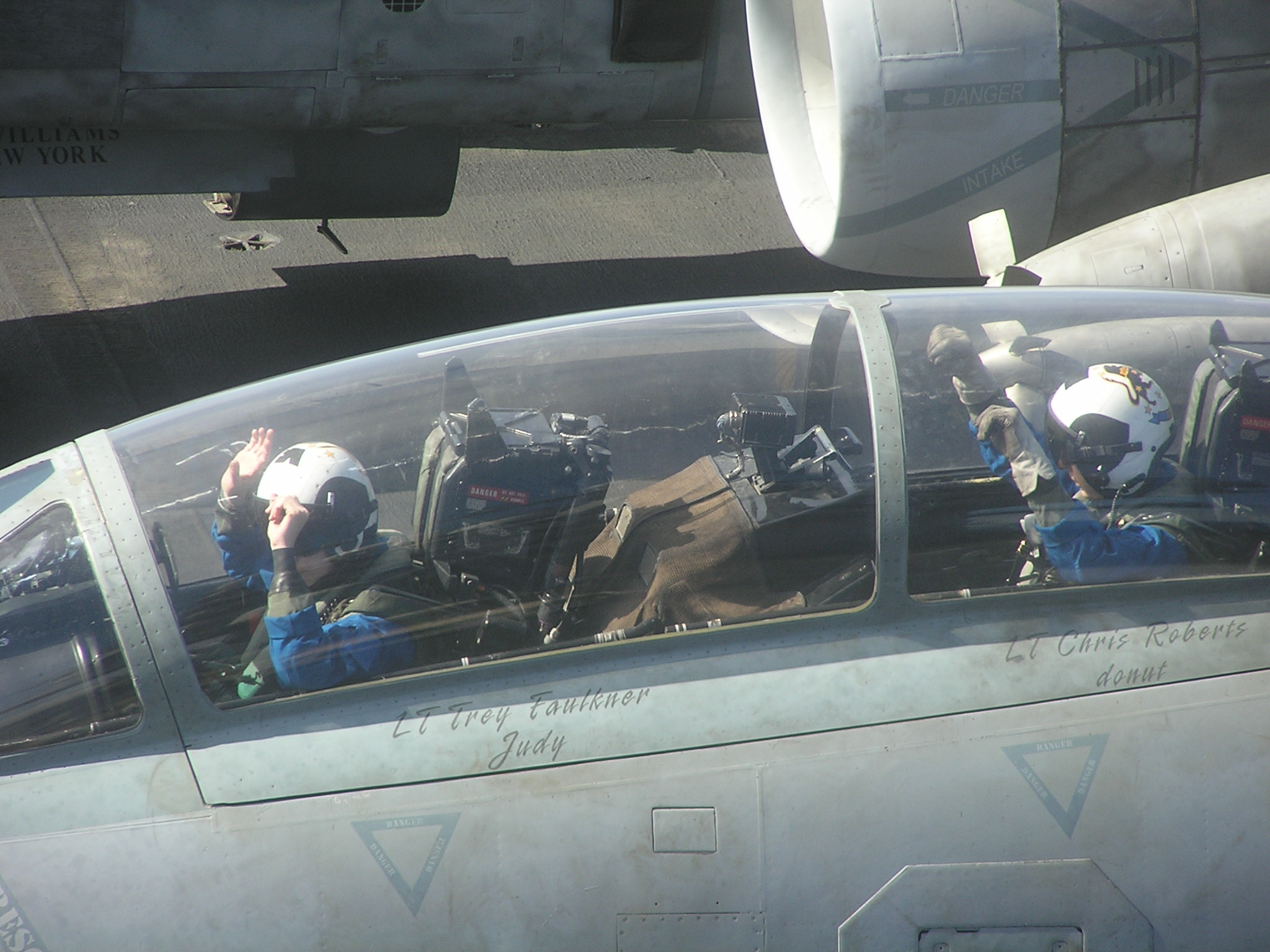
A Tomcat´s Pilot and RIO waiting for checks prior take-off on Theodore Roosevelt´s flight deck, 3rd March 2006, Luís Díaz-Bedía Astor
Tomcat taxiing on Theodore Roosevelt´s flight deck, 3rd March 2006, Luís Díaz-Bedía Astor
Tomcat on catapult on board Theodore Roosevelt, 3rd March 2006, Luís Díaz-Bedía Astor
Tomcat taking off from Theodore Roosevelt, 3rd March 2006, Luís Díaz-Bedía Astor
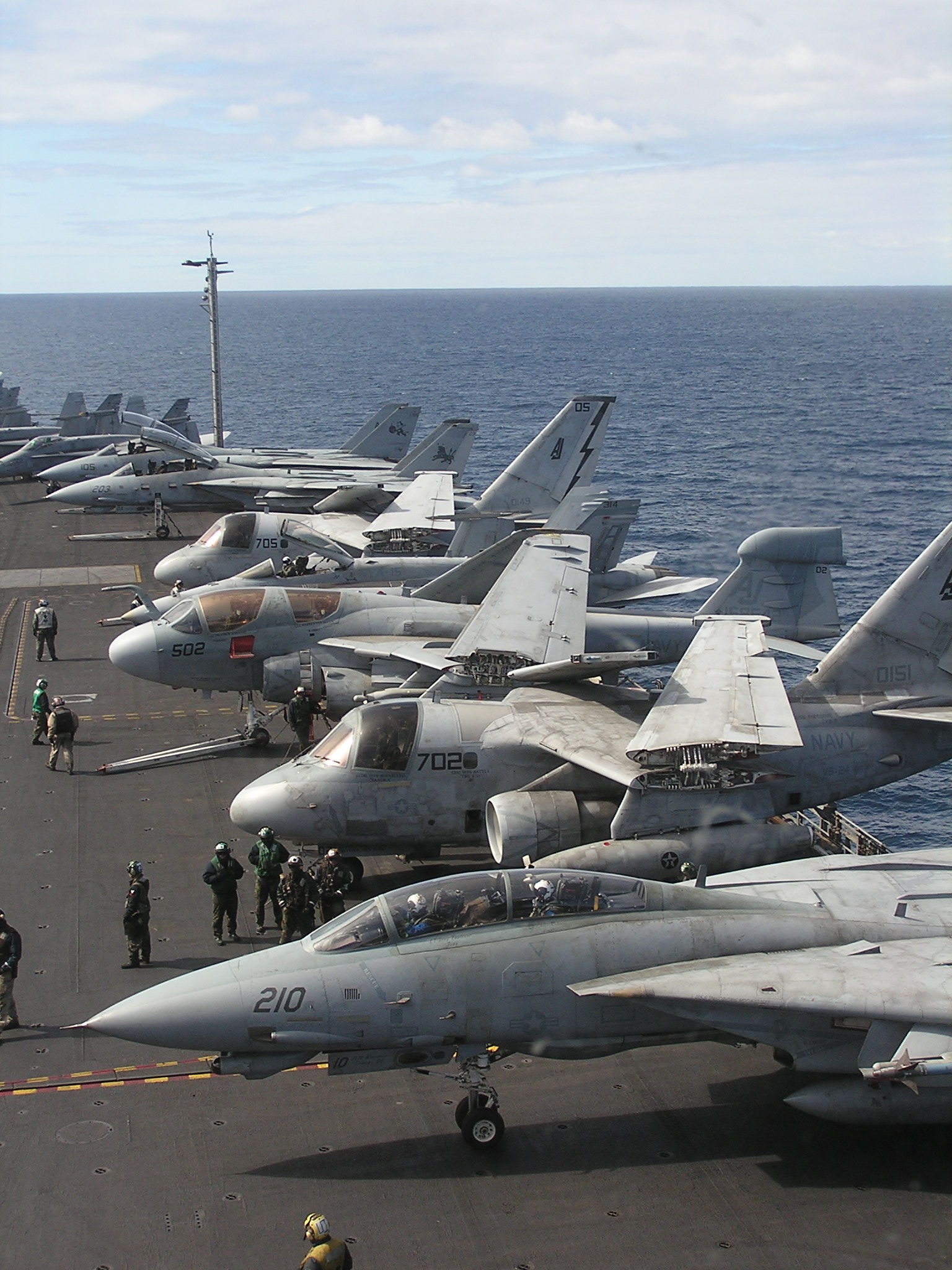
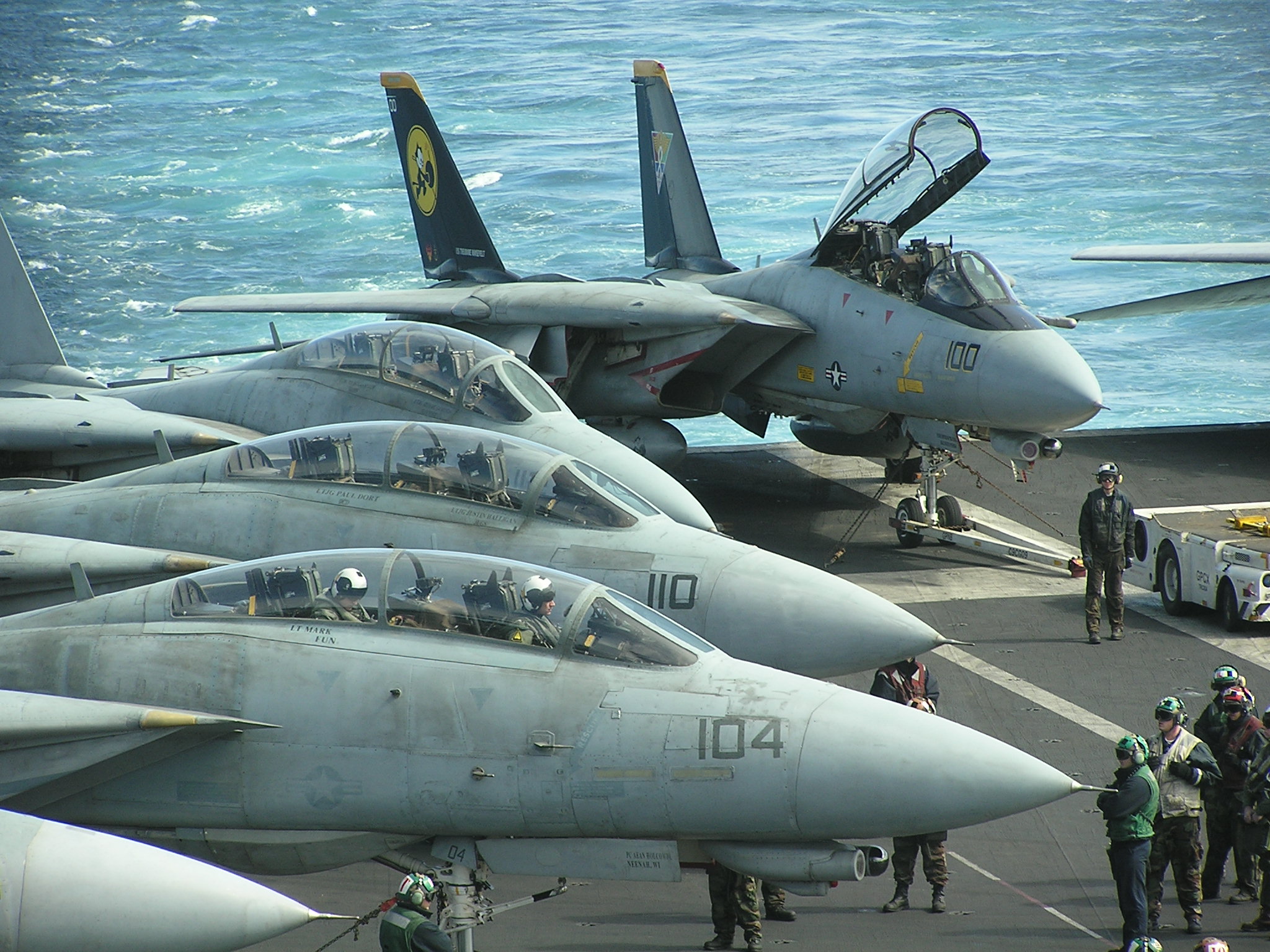
Tomcats stationed on Theodore Roosevelt´s flight deck, 3rd March 2006, Luís Díaz-Bedía Astor
Tomcat landing on board Theodore Roosevelt, 3rd March 2006, Luís Díaz-Bedía Astor
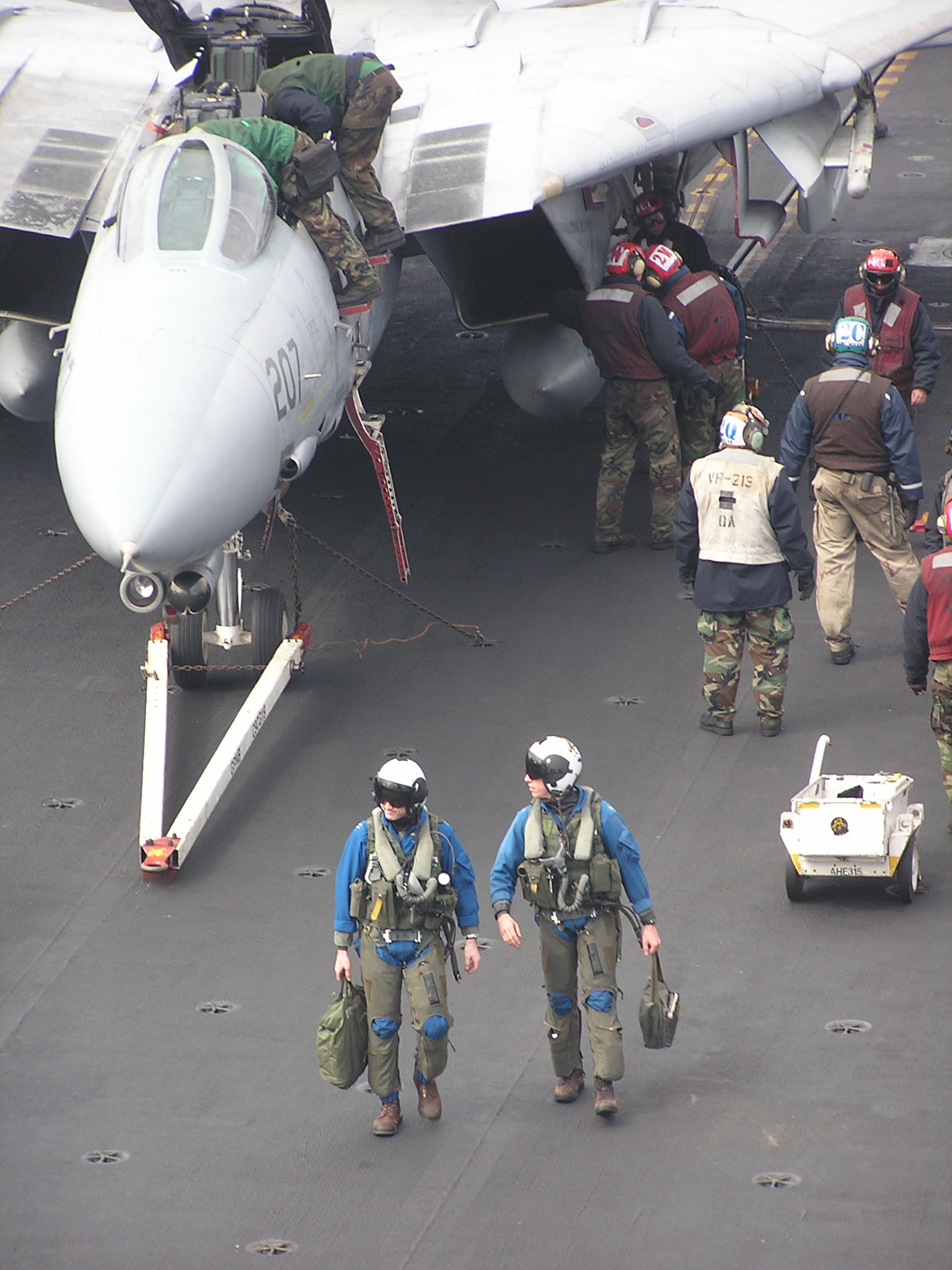
Tomcat´s Pilot and RIO just after landing on board Theodore Roosevelt, 3rd March 2006, Luís Díaz-Bedía Astor
Tomcat´s post landing checks on Theodore Roosevelt´s flight deck, 3rd March 2006, Luís Díaz-Bedía Astor
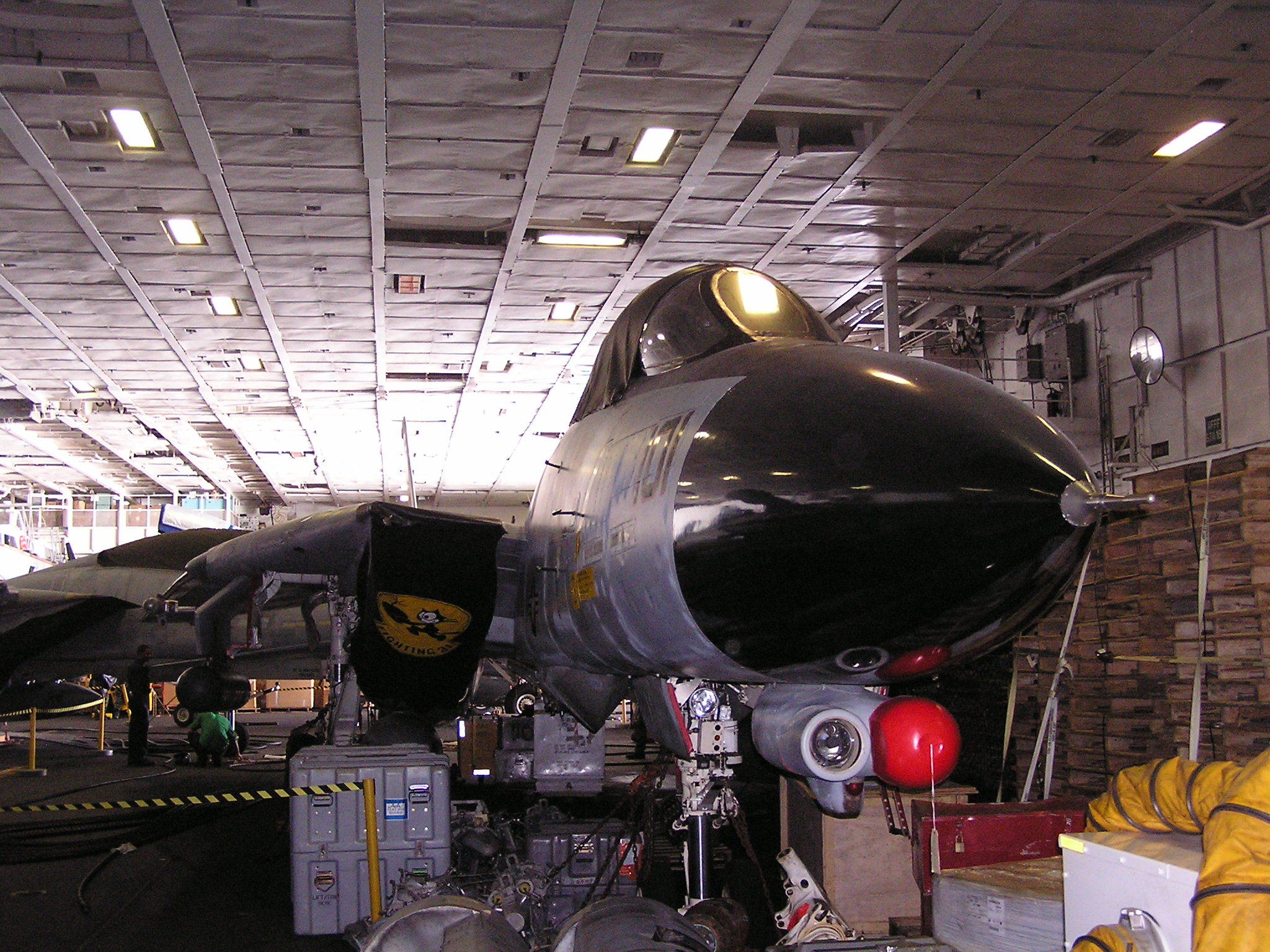
A Tomcat in Theodore Roosevelt´s hangar, 3rd March 2006, Luís Díaz-Bedía Astor